Corns and Calluses are incredibly common foot problems, but just like dry skin, they are not something you should “live with.” Left untreated, they can cause severe discomfort and alter the way you walk, but they often suggest an external problem. Not an internal one.
Why? Because when your skin thickens this way, it is your body’s natural defense mechanism kicking in. Your skin is trying to build a shield to protect itself from repetitive pressure and friction. That comes from outside.
At Wayne Foot & Ankle Center, we see a lot of patients who need help with corns and calluses. And while we certainly see all kinds of mistakes, we also know how treatable they are in the long term. Keep reading for prevention tips, slip-ups to avoid, and at-home fixes, too.
Corns vs. Calluses: What is the Difference?
Let’s start with the basics:
While they are both caused by pressure (often from ill-fitting shoes or walking barefoot), corns and calluses behave very differently.
1. Corns (The “Pebble” Sensation)
What they are: Small, circular areas of thickened skin that feature a distinct, hard center surrounded by inflamed tissue.
- Where they form: They often develop on the non-weight-bearing parts of your feet, such as the tops and sides of your toes, or between the toes where the bones rub together.
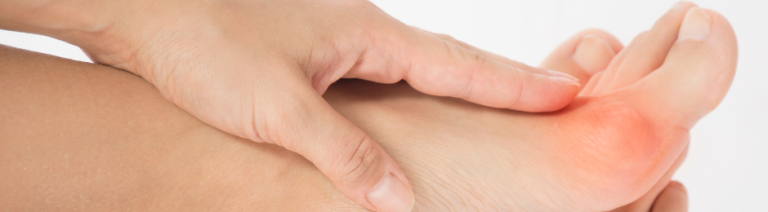
- The Feel: Corns can be very painful when pressed, often feeling like a small pebble or thorn is pushing directly into your skin.
2. Calluses (The “Shield”)
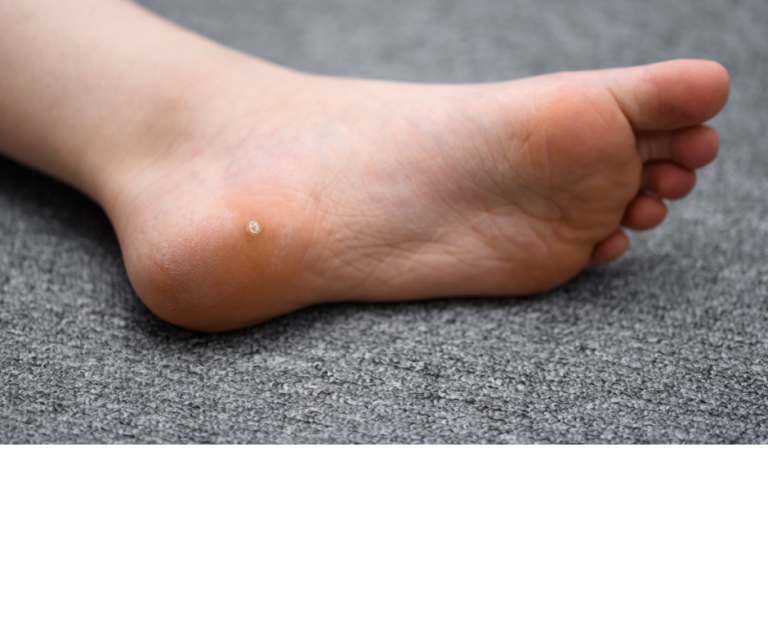
What they are: Larger, flatter, and more diffuse patches of hardened, waxy skin.
- Where they form: Calluses develop on the weight-bearing soles of the feet, specifically under the heels or the balls of the feet.
- The Feel: They vary in size and are generally less sensitive than normal skin. While they are usually not painful on their own, a severe, cracked callus can cause significant discomfort when walking.
The “Friction” Symptom Checklist
The signs of corns and calluses are relatively easy to identify. Look out for:
- [ ] Thick, rough, or waxy areas of skin.
- [ ] A hardened, raised bump (especially on the toes).
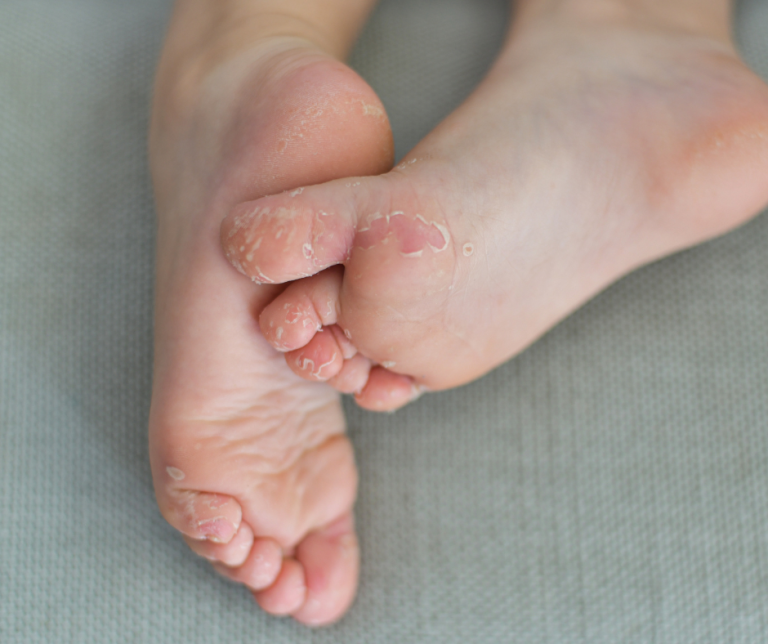
- [ ] Flaky, excessively dry skin on the heel or sole.
- [ ] Pain or sharp tenderness under the skin when pressed.
- [ ] Discomfort when walking or wearing your standard shoes.
The Diabetes Danger Zone
For most healthy adults, corns and calluses are an annoyance.
For individuals with diabetes or poor circulation, they pose a serious medical threat. A thick callus can hide a dangerous pressure ulcer underneath.
If you have diabetes, never attempt to shave, cut, or chemically remove a corn or callus at home. Seek professional medical attention immediately to prevent limb-threatening infections.
5 Ways We Treat Corns & Calluses
To truly fix the problem, we must eliminate the friction. Our comprehensive treatment options focus on immediate relief and long-term prevention:
- Professional Trimming (Debridement): Put down the bathroom clippers and salon “cheese graters.” Dr. Calligaro safely and painlessly shaves down the thickened skin in a sterile environment to provide instant relief.
- Custom Orthotic Inserts: If a structural imbalance (like flat feet) is causing you to put too much pressure on one part of your foot, we design prescription custom orthotics. These act as a scaffold to realign your foot and distribute your weight evenly.
- Protective Padding: We utilize clinical-grade, non-medicated pads to offload pressure. (Note: We strongly advise against using over-the-counter medicated acid pads, as they can cause chemical burns to healthy skin!)
- Footwear Modification: We guide you toward proper footwear with a wider toe box to stop squeezing and rubbing.
- At-Home Care: We recommend safe maintenance routines, including warm water soaks, gentle exfoliation, and the use of clinical-grade urea moisturizing creams.
A Note on Surgical Correction: In severe cases where a structural bone deformity (like a hammertoe or bone spur) is the constant source of the friction, Dr. Calligaro can perform minor surgery to correct the alignment and stop the corn from returning.
Step Forward with Confidence
Every foot is unique, and proper care requires a personalized approach. Do not let rough, painful skin win! With our help, you can manage it, restore it, and get back to moving forward.
Questions? Concerns? Dr. Lindsey Calligaro at Wayne Foot & Ankle Center is happy to help. Our team has tools, techniques, and proven expertise to treat your feet. Contact us today to schedule an appointment!